
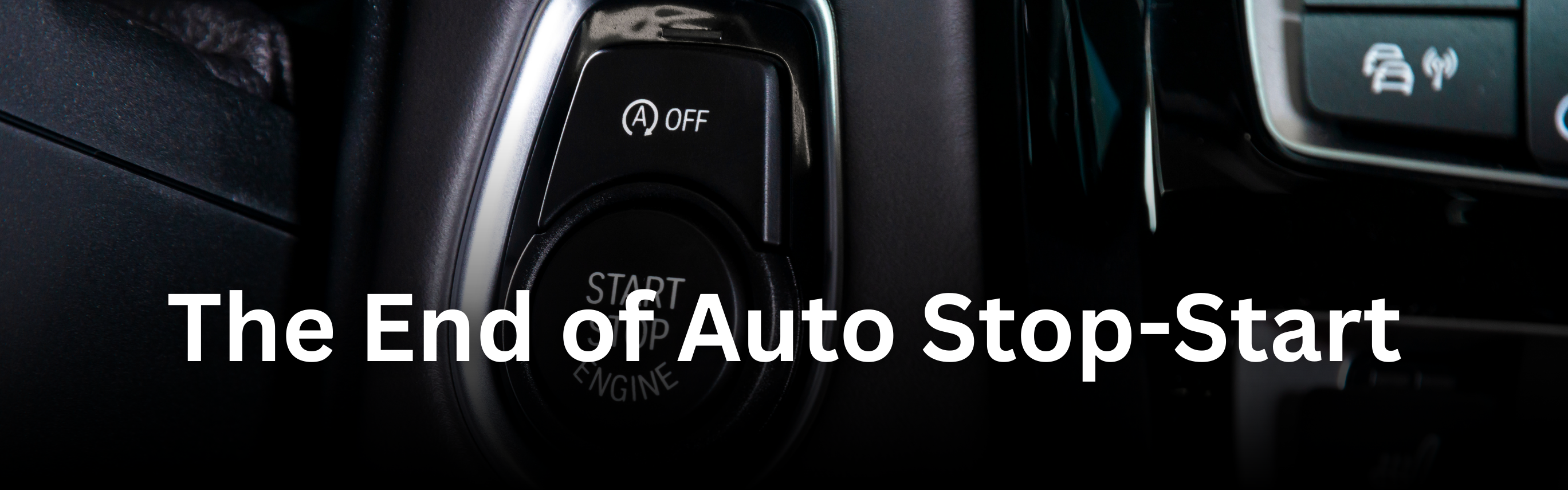
The Auto Start-Stop Feature: A Regulatory Gimmick That’s Finally Losing Its Mandate
If you’ve purchased a new vehicle in the past decade, you’ve almost certainly dealt with auto start-stop, whether you liked it or not. Pull up to a light, foot on the brake, engine dies. Foot off, it jolts back to life. For many drivers, this wasn’t a convenience; it was an annoyance that disrupted the natural flow of driving. Some tolerated it for the promised fuel savings. Far more drivers instinctively hit the disable button every time they started the car. Now, with the EPA’s February 2026 decision to eliminate off-cycle greenhouse gas credits for start-stop systems, part of a broader rollback of federal emissions incentives, automakers no longer have the same regulatory pressure to force this feature into every model. This shift could mean fewer vehicles come equipped with it as standard, giving drivers more genuine choice.
Why It Appeared in Virtually Every New Car
The concept sounded reasonable on paper: idling wastes fuel and emits unnecessary pollutants, so shut off the engine at stops and restart when ready to go. In city driving, the theory went, this could meaningfully cut consumption and emissions.
In reality, the rapid spread of start-stop owed far more to compliance than innovation. As federal fuel economy and emissions rules tightened, manufacturers needed every fraction of a percent to meet fleet-wide targets during lab testing. Start-stop delivered measurable (if modest) gains on those tests without requiring major powertrain redesigns. It was cheap regulatory credit...until now.

The Real-World Reality: Annoyance and Added Wear
On the road, the experience was often less impressive. Modern systems use reinforced starters, heavy-duty (often AGM) batteries, and quick restarts to minimize the obvious jolt, vibration, or delay. Manufacturers insist these upgrades handle the extra cycles without issue. Yet the frequent on-off action undeniably increases mechanical stress compared to traditional driving.
Starters engage far more often, potentially thousands of additional cycles per year in stop-and-go traffic. Batteries endure deeper discharge/recharge demands, accelerating degradation in real-world conditions like extreme temperatures or short trips. While engineered components are “beefed up,” many mechanics and long-term owners report earlier failures: premature battery replacements (sometimes every 2–3 years instead of 4–5), starter issues, or related strain on alternators and mounts. The perception of added wear isn’t just anecdotal; it’s backed by the simple physics of more cycles equaling more fatigue on parts that weren’t originally designed for constant duty.
For driving enthusiasts, the interruption feels particularly out of place, disrupting smooth throttle response and engine character at every light. The default-on behavior (with the disable button resetting each drive) only amplified frustration. And the fuel savings? Often marginal in everyday use—sometimes just 1–3% overall, hardly worth the added complexity, cost, and potential repair bills down the line.
What the EPA Change Actually Means
In early 2026, the EPA removed the off-cycle credits that rewarded start-stop inclusion, as part of eliminating broader greenhouse gas compliance incentives. This doesn’t ban the feature, automakers can keep it if they want but the financial/regulatory push is gone. No more “free” credits for a system many drivers actively dislike.
Looking Ahead: A Return to Practical Driving?
Vehicle development moves slowly, so don’t expect start-stop to vanish from showrooms tomorrow. But over the next few model years, we’re likely to see more options: some brands scaling it back, others refining it (or making disable permanent), and a general shift toward hybrids/EVs where engine-off at stops is inherent rather than bolted-on.
For drivers who always found the feature intrusive and questionable in terms of long-term durability, this feels like a victory for common sense. The incremental fuel benefits never fully offset the real-world drawbacks and added wear on starters and batteries, driver irritation, which leads to extra cost in repairs. Regulatory priorities shaped vehicles in ways many never asked for; easing that pressure lets manufacturers prioritize what enthusiasts value most: responsive, reliable, and enjoyable driving without unnecessary gimmicks.
What did you think about Auto Stop-Start? Did you also turn it off everytime you got in the car?
Tell us on Instagram and Facebook!