
Disc Brakes vs Drum Brakes
If you have a classic car, chances are it rolled off the assembly line with drum brakes on all four corners. They worked fine for their time, but driving standards have changed a lot since then. Understanding what sets disc brakes apart from drum brakes can help you decide whether a conversion is worth it for your build.
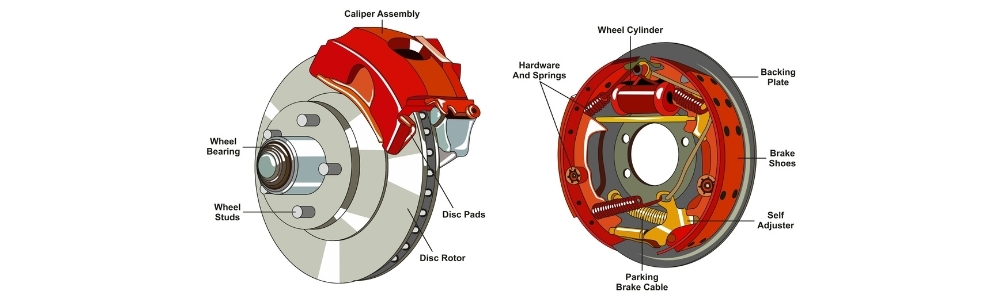
Drum brakes have been around for over a hundred years and the basic design has not changed much. When you press the brake pedal, hydraulic pressure pushes a set of curved brake shoes outward against the inside of a spinning drum. That friction is what slows the car down. When you let off the pedal, return springs pull the shoes back to their resting position.
While with disc brakes work differently. Instead of shoes pressing outward inside a drum, flat brake pads press inward against both sides of a spinning rotor. A caliper mounted to the spindle or axle housing holds the pads in place and uses hydraulic pressure to squeeze them against the rotor when you hit the brake pedal. When you let off, the caliper releases and the rotor spins freely.
The Real Differences
The biggest difference between the two comes down to heat. Drum brakes trap heat inside a closed housing. On a long mountain descent or repeated hard stops, that heat builds up and the brakes start to fade. You push the pedal and the car does not slow down the way it should. Disc brakes dissipate heat much more quickly, which keeps stopping power consistent even when the brakes are being worked hard.
What Does This Mean for Your Car?
If you are driving a classic GM, Mopar, or Ford on the street, the factory drum brake system was designed around the power output and weight of the car at the time. Modern driving involves a lot more stop-and-go traffic, higher highway speeds, and heavier traffic overall. The drum brakes on a 1960s or 70s muscle car were never intended for that kind of daily use. A disc brake conversion addresses all of it. You get shorter stopping distances, consistent pedal feel, and brakes that hold up better in wet weather. The front axle is where disc brakes make the biggest difference, since the front brakes do the majority of the work during any stop. Adding rear disc brakes on top of that gives you a complete upgrade.
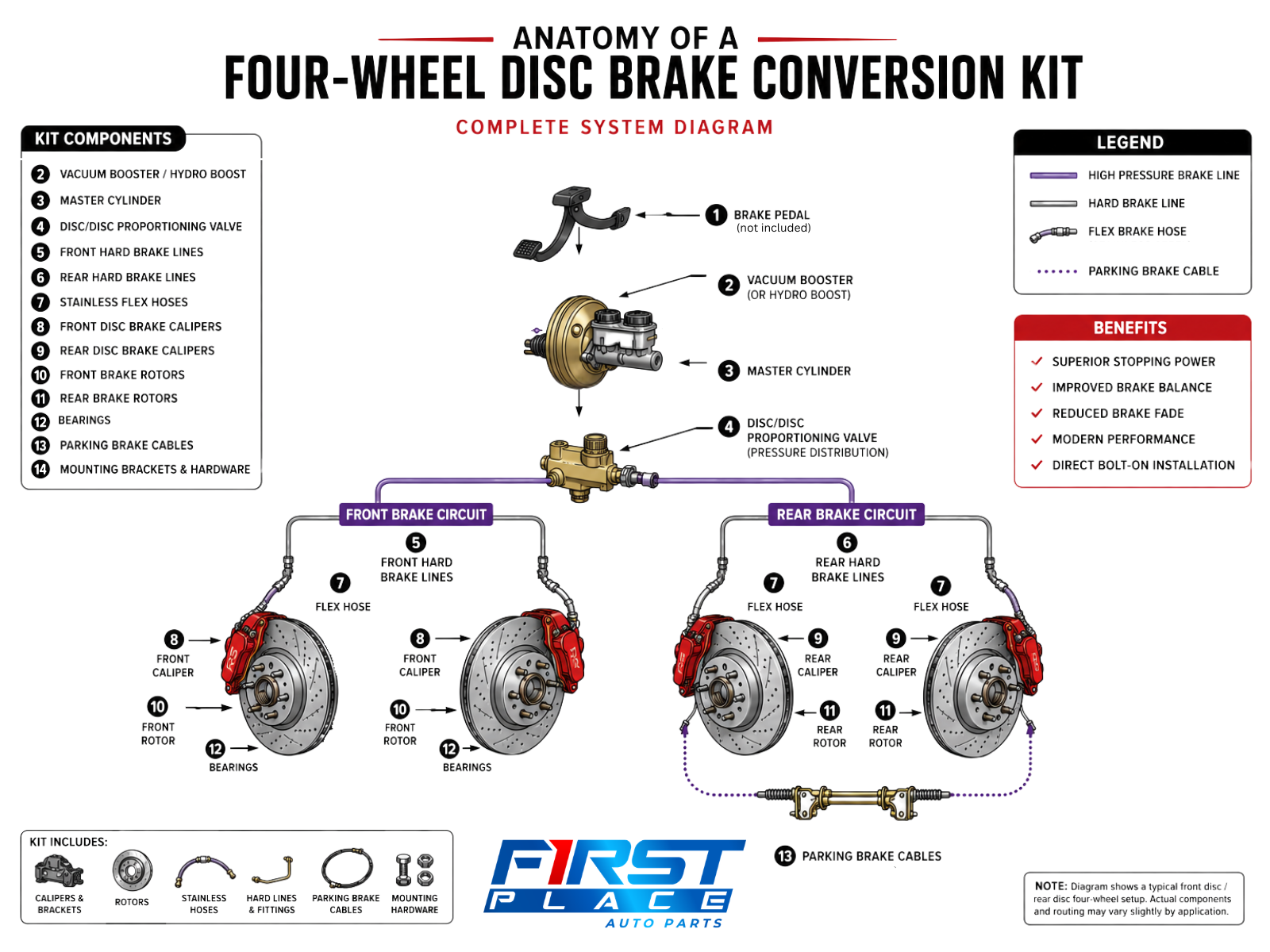
First Place Auto Parts carries front and rear disc brake conversion kits for a wide range of classic GM and Mopar applications, including A Body, B Body, F Body, X Body, and Full Size Chevy platforms. The kits include everything you need to complete the conversion with standard hand tools. If you are ready to ditch the drums, browse our disc brake conversion kits or reach out and we will help you find the right kit for your ride.